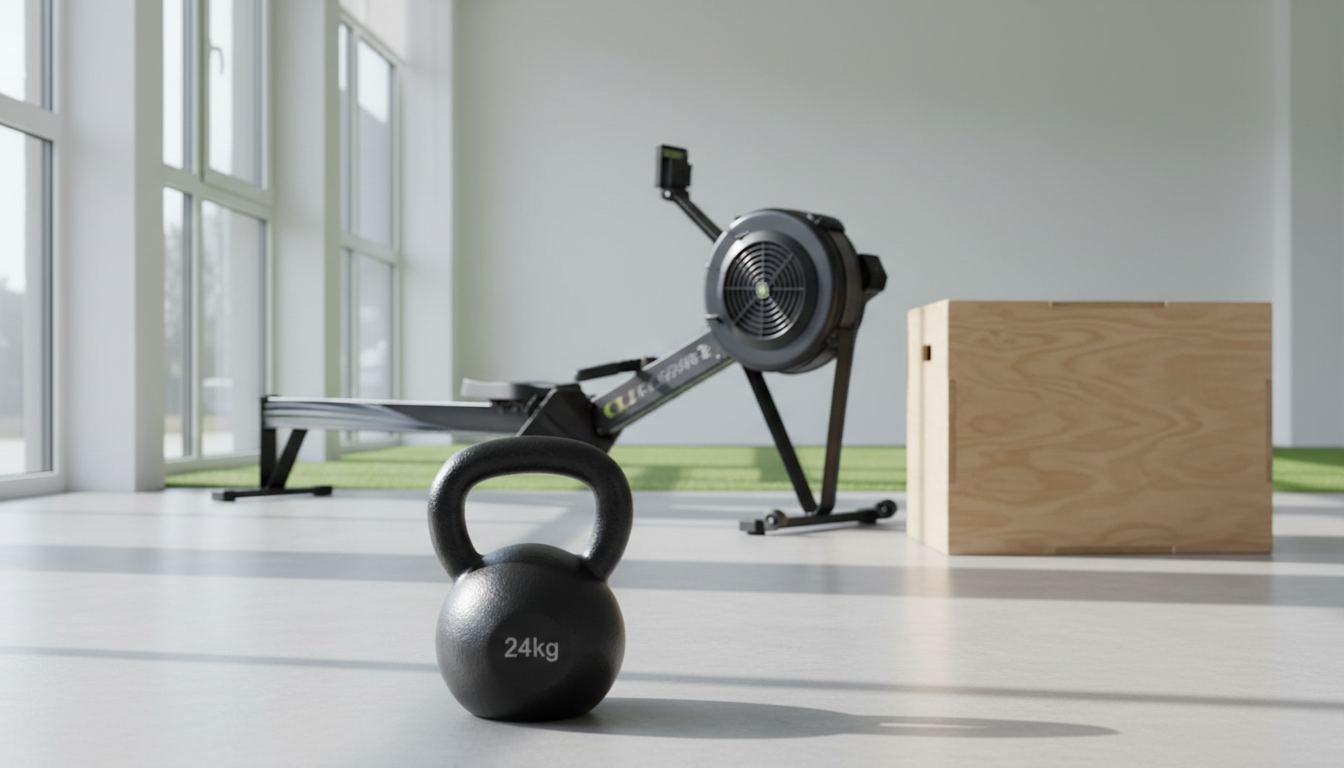
HIIT exercises for beginners should be simple, safe, and short. High-intensity interval training, usually called HIIT, is popular because it fits into a busy schedule. Instead of exercising at one steady pace for an hour, you alternate short bursts of hard effort with periods of rest or easy movement. A good session can take as little as 20 minutes. This guide explains what HIIT is, shows six of the best HIIT exercises for beginners with easy options, and gives you a simple 20-minute plan you can start this week.

What Is HIIT?
HIIT is a style of interval training. You work hard for a short period, such as 20 to 60 seconds, then recover for a similar or longer period, and repeat. The “hard” part should feel challenging, roughly an 8 out of 10 effort, while the “easy” part lets your breathing settle.
You can do HIIT with almost any activity: running, cycling, rowing, bodyweight moves, or kettlebells. It does not require a gym, although the six exercises below use common gym equipment, and each one has a simple alternative you can do at home.
What Are the Benefits?
Many studies suggest that interval training can improve cardiovascular fitness in less time than steady, moderate exercise. It can also help build endurance and strengthen the legs and core. Results vary from person to person, so treat HIIT as one effective tool rather than a guaranteed shortcut. Claims about exact calories burned per hour differ widely depending on your body, effort, and exercise choice, so it is best to ignore big promises.
For adults, the Physical Activity Guidelines for Americans count 75 to 150 minutes of vigorous activity per week as equal to 150 to 300 minutes of moderate activity, which is one reason many people like HIIT for saving time.
Before You Start: Warm-Up and Safety
Never jump straight into hard effort. Spend five minutes warming up with easy marching or jogging in place, arm circles, bodyweight squats, and hip hinges. Choose a stable surface with enough space, wear supportive shoes, and keep water nearby. Good form always comes before speed. If you are unsure about a move, ask a qualified trainer at your gym to show you.
The 6 Best HIIT Exercises for Beginners
You can adjust any of these moves to target different muscle groups. If you prefer cardio-focused sessions, see our guide to a full-body cardio workout.
1. Burpee
A burpee is a full-body move that combines a squat, a plank or push-up, and a jump. It raises your heart rate quickly and works your legs, chest, shoulders, and core. How to do it: Squat down and place your hands on the floor, step or jump your feet back into a plank, lower your chest toward the floor if you can, return your feet toward your hands, and jump up with your arms overhead. Beginner option: Step your feet back and forward instead of jumping, and skip the push-up.
2. Kettlebell Swing
The kettlebell swing is a hip-hinge exercise that works your glutes, hamstrings, back, and core. How to do it: Stand with your feet about shoulder-width apart and the kettlebell on the floor just in front of you. Hinge at your hips, grab the handle with both hands, hike the bell back between your legs, then snap your hips forward so the bell swings up to about chest height. The power comes from your hips, not your arms. Beginner option: Practice the hip hinge without weight first, then use a light kettlebell or dumbbell.
3. Rowing Machine
Rowing works your legs, back, arms, and core with little impact on your joints, which makes it a good option for many people. How to do it: Push with your legs first, then lean back slightly and pull the handle to your lower chest. To return, extend your arms, hinge forward from the hips, and then bend your knees. Think “legs, body, arms” on the way back and “arms, body, legs” on the way forward. Beginner option: Row at an easy pace for the rest periods and focus on smooth technique.

4. Russian Twist
This move targets your abs and obliques, the muscles on the sides of your torso. How to do it: Sit on the floor with your knees bent and lean back slightly with a straight spine. Hold your hands together or a light weight at your chest, then rotate your torso to one side and then the other. Beginner option: Keep your feet on the floor and twist without any weight.
5. Assault Bike or Stationary Bike
An assault bike uses both your arms and legs and makes it easy to push hard for short bursts. How to do it: Adjust the seat so your leg is almost straight at the bottom of the pedal stroke. Keep your chest up and your head neutral, and push and pull the handles in rhythm with your legs. Beginner option: A regular stationary bike works well too. Pedal fast for the work interval and slowly for the recovery.
6. Box Jump
Box jumps build explosive leg power and raise your heart rate quickly. How to do it: Stand in front of a sturdy plyo box with your feet about shoulder-width apart. Bend your knees, swing your arms, and jump onto the box, landing softly in a quarter squat with your whole foot on the box. Stand tall, then step down carefully. Start with a low box and only increase the height when landing feels smooth and controlled. Beginner option: Do fast step-ups onto a low, stable step instead of jumping.
A Simple 20-Minute Beginner HIIT Session
- Warm-up (5 minutes): Easy marching, arm circles, bodyweight squats, and hip hinges.
- Round 1 (6 minutes): Do each of the six exercises for 30 seconds of work followed by 30 seconds of rest.
- Break (1 minute): Walk around and drink some water.
- Round 2 (6 minutes): Repeat all six exercises with the same 30-seconds-on, 30-seconds-off pattern.
- Cool-down (2 to 3 minutes): Walk slowly, then stretch your legs, hips, and shoulders.
If 30 seconds of work feels too hard, use 20 seconds of work and 40 seconds of rest. As you get fitter, extend the work time or add a third round.
How Often Should You Do HIIT?
Because HIIT is demanding, most beginners do well with one to three sessions a week, with at least a day of rest between them. On your other days, mix in easy cardio such as walking and some strength training. If you want a gentler cardio option, try our Japanese walking interval plan, and add strength work with our beginner dumbbell workout.
Common HIIT Mistakes
- Skipping the warm-up. Cold muscles and joints are more likely to feel sore or get hurt.
- Going all-out too early. Build up your intensity over a few weeks.
- Poor form when tired. If your technique falls apart, take a longer rest or switch to an easier option.
- Doing HIIT every day. Recovery is when you get stronger.
- Ignoring pain. Muscle fatigue is normal, but sharp pain is a signal to stop.
Who Should Check With a Doctor First?
HIIT is intense, so it is wise to talk to a doctor first if you have a heart or lung condition, high blood pressure, joint or back problems, are pregnant, or have not exercised in a long time. Stop immediately and seek medical help if you feel chest pain, dizziness, or unusual shortness of breath.
Frequently Asked Questions
Is HIIT good for beginners?
It can be, as long as you start with easier versions of the exercises, shorter work periods, and plenty of rest. Beginners should build up gradually.
How long should a HIIT workout be?
Many sessions last 15 to 25 minutes including the warm-up and cool-down. Longer is not always better, since the work periods are meant to be hard.
Can I do HIIT every day?
Doing hard interval workouts every day is usually not recommended, especially for beginners. Aim for one to three sessions a week and fill the other days with lighter activity.
Do I need equipment?
No. You can do HIIT with bodyweight moves like squats, step-backs, mountain climbers, and fast marching. Equipment just adds variety.
The Bottom Line
HIIT is a time-efficient way to build fitness when you use good form, start at your own level, and recover between sessions. Pick a few of these exercises, follow the 20-minute plan, and increase the challenge slowly.
This article is for general information only and is not medical advice. Talk to a healthcare professional before starting a new exercise program, especially if you have a medical condition, and stop if you feel pain or unwell.
1 thought on “HIIT Exercises for Beginners: 6 Best Moves and a 20-Minute Workout”
Comments are closed.